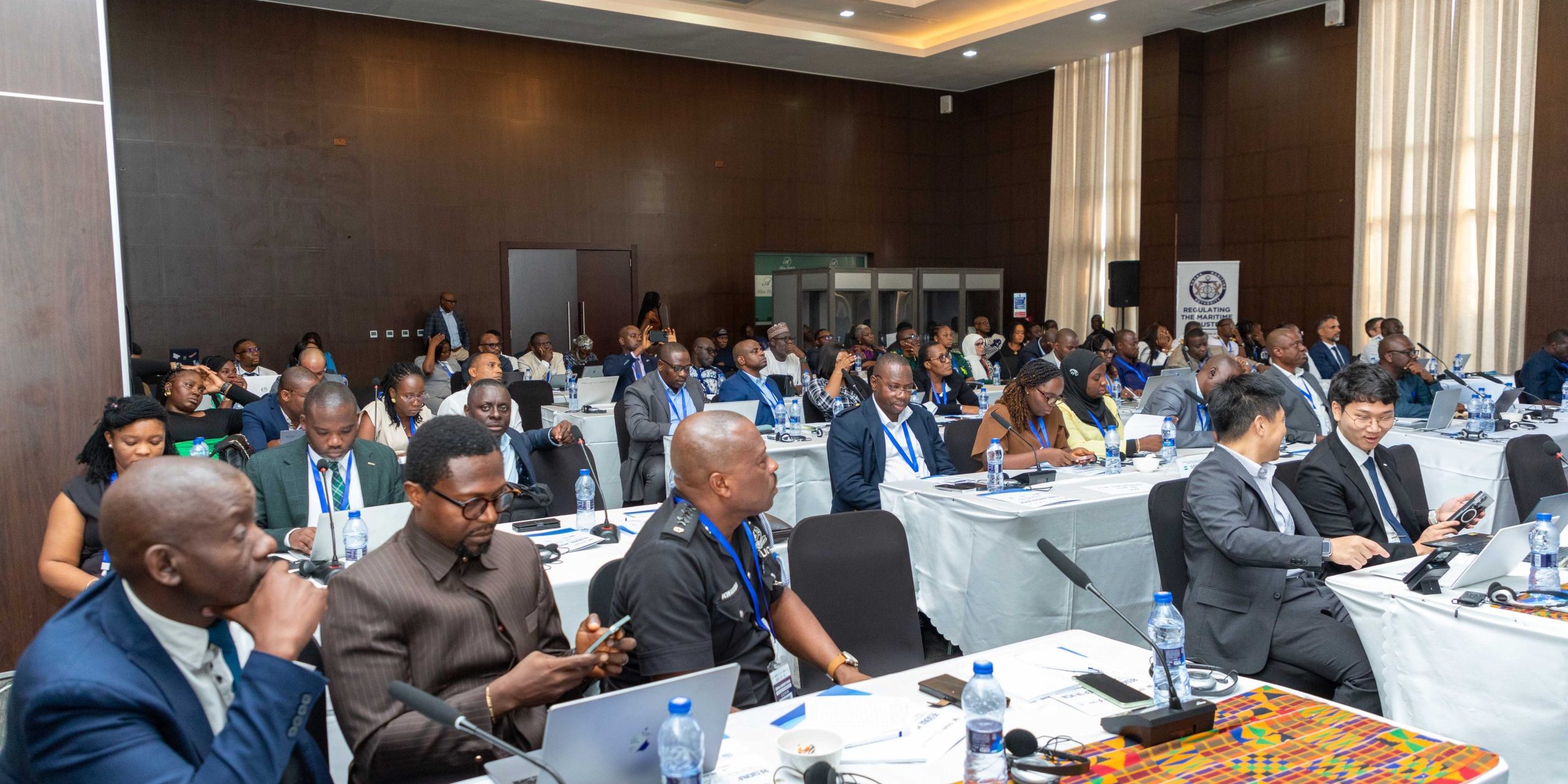
Move Beyond Policy to Practical Digital Port Solutions — Transport Minister Urges Regional Stakeholders
The workshop aims to help maritime authorities, port operators, customs officials, and shipping agencies transition from paper-heavy, fragmented clearance processes to a single, unified digital platform where all vessel arrival, stay, and departure documentation is submitted once and shared seamlessly across all regulatory bodies.
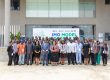
Organized by the International Maritime Organization (IMO) in partnership with the Ghana Maritime Authority (GMA), the World Bank, and the Africa Transport Policy Program (SSATP), the event brought together 55 delegates from Cabo Verde, Equatorial Guinea, The Gambia, Ghana, Guinea-Bissau, Liberia, Nigeria, Sao Tome and Principe, and Sierra Leone.
Practical Solutions
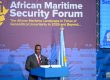
Opening the workshop, the Minister for Transport, Joseph Bukari Nikpe, in a speech read on his behalf by the Director in charge of Research, Statistics, and Information Management at the Ministry of Transport, Merlyn Gaskin called on West and Central African maritime stakeholders to move beyond policy discussions and deliver practical solutions to streamline vessel clearance and eliminate administrative bottlenecks across regional ports. 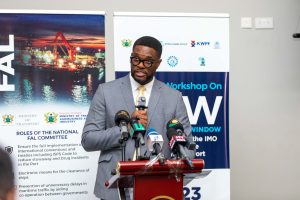
The Minister emphasized that establishing fast, predictable, and transparent port operations is no longer merely a technical objective, but an urgent economic necessity for the sub-region. “When traders face unnecessary delays, when the same information is submitted repeatedly, or when public institutions do not coordinate effectively, the cost is ultimately borne by businesses, consumers, and the national economy,” Mr Nikpe stated.
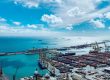
Highlighting the strategic importance of Ghana’s primary commercial gateways in Tema and Takoradi, the Minister noted that modernising port clearance systems remains central to expanding trade, attracting foreign direct investment, and solidifying Ghana’s position as a premier commercial hub in West Africa.
He pointed out that Ghana has already made significant strides through the Integrated Customs Management System (ICUMS), digital port management software, and electronic data exchanges among key maritime actors.
Mr Nikpe pointed out that implementation gaps continue to challenge maritime reforms across Africa, urging participating countries to leverage the workshop to bridge these gaps and build interoperable cross-border digital frameworks.
“Regional cooperation is vital, given the interconnected nature of maritime trade along the Gulf of Guinea where trade extends beyond national borders. Hence, stronger cooperation among our countries is essential to improving port efficiency and regional trade,” Mr Nikpe said.
He expressed the hope that the week-long engagement would foster actionable pathways toward the full rollout of Maritime Single Windows aligned with IMO standards.
The Minister also commended the IMO, the World Bank, the SSATP, and other development partners for their technical and financial support toward regional trade facilitation.
IMO
The Head of the Africa Section at the International Maritime Organization (IMO), Issa Mwajita, highlighted the critical role of efficient maritime transport in the economic development of West and Central Africa. 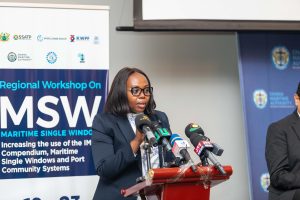
She observed that ports serve not only national economies but also provide vital gateways for neighbouring landlocked countries. “The efficiency of ship clearance and port operations has implications beyond the ports themselves, influencing transport costs, supply chain reliability, and access to regional and international markets,” Ms Mwajita said.
Thus, improving information exchange among ships, ports, and public authorities, she noted, is a practical step toward addressing these challenges.
World Bank
A Senior Trade Facilitation Specialist at the World Bank, Satya Sahu, described the Maritime Single Window as a coordinated digital environment for managing the formalities associated with ships arriving at, staying in, and departing from ports. He explained that the system is intended to facilitate trade, improve port efficiency, strengthen government controls, and enhance the competitiveness of maritime transport. 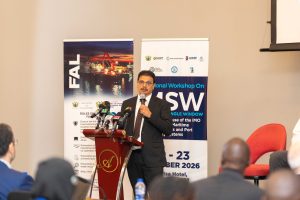
Mr Sahu, however, cautioned that digitising individual processes without connecting the various systems could undermine the benefits of digitalisation.
“When port authorities, customs agencies, and shipping lines operate separate systems without effective integration, users may still be required to submit the same information multiple times,” he cautioned.
He stressed the need to prioritise effective governance, skills development, interoperability, and user engagement to ensure that Maritime Single Windows and Port Community Systems deliver meaningful improvements beyond serving strictly as technology platforms.
SSATP
The Regional Integration Lead at the Africa Transport Policy Program (SSATP) of the World Bank, Olivier Hartmann, noted that SSATP partnered with the IMO and the World Bank to convene Port Authorities, Customs, and Maritime Administrations across a series of regional technical workshops. 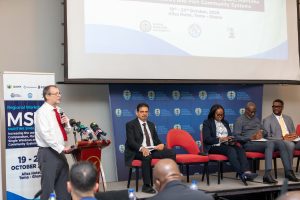
He emphasized that the Tema event concludes a sub-regional tour following successful sessions in Abidjan in December 2025 and Dar es Salaam in April 2026, setting the stage for direct national-level support. He commended the Government of Ghana for hosting the workshop and urged delegates to use the gathering to forge lasting inter-agency cooperation and build digital maritime systems tailored to their needs.
Korea-World Bank Partnership Facility
The Representative of the Korea-World Bank Partnership Facility, Won-Dong Chung, noted in his remarks that the global maritime and logistics environment is changing rapidly. Ports, he said, are no longer simply physical hubs for cargo handling; rather, they are increasingly becoming connected platforms where data, information, and collaboration play a critical role.
“In this changing environment, the competitiveness of ports depends not only on physical infrastructure, but also on how effectively they connect information, processes, and stakeholders,” he said.
Citing the example of Busan Port, which he noted experienced this transformation firsthand, stakeholders have continued to pursue digital innovation to improve operational efficiency, enhance connectivity, and strengthen collaboration across the port community.
Ghana Maritime Authority (GMA)
The Director-General of the Ghana Maritime Authority, Dr Kamal-Deen Ali (Naval Capt. Rtd), in his welcome address, urged delegates to focus on achieving the full and effective implementation of a legally supported, interoperable, and user-friendly National Maritime Single Window. 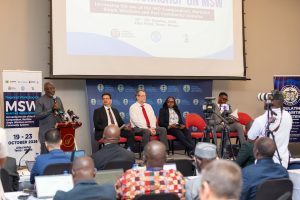
He emphasized the need to assess how existing systems, including the Integrated Customs Management System (ICUMS) and the Advanced Vessel Clearance System (AVCS), could exchange information securely and consistently to improve coordination among relevant maritime stakeholders.
He encouraged participants to engage actively in discussions and contribute to outcomes that would strengthen Ghana’s maritime sector, stressing that the success of the initiative should not be measured solely by the introduction of digital systems, but by their effectiveness in improving service delivery, reducing unnecessary delays, facilitating trade, and supporting economic development.