The Minister for Transport, Joseph Bukari Nikpe, has reaffirmed Government’s commitment to translating maritime policies and international regulations into concrete actions that will strengthen Ghana’s position as a leading maritime hub in West Africa. 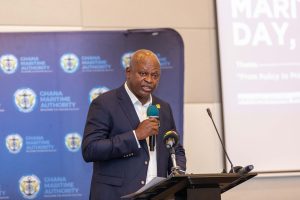
He said the Government, through the Ministry of Transport and its agencies, would continue to implement strategic initiatives aimed at improving port efficiency, expanding maritime infrastructure, strengthening ship-repair and offshore service capabilities, and enhancing Ghana’s role in regional and international trade.
Delivering the keynote at the 2026 World Maritime Day organized by the Ghana Maritime Authority (GMA) on Thursday, September 24, 2026, the Minister emphasized the maritime sector’s vital role in driving Ghana’s economy, trade, and job creation.
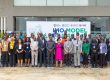
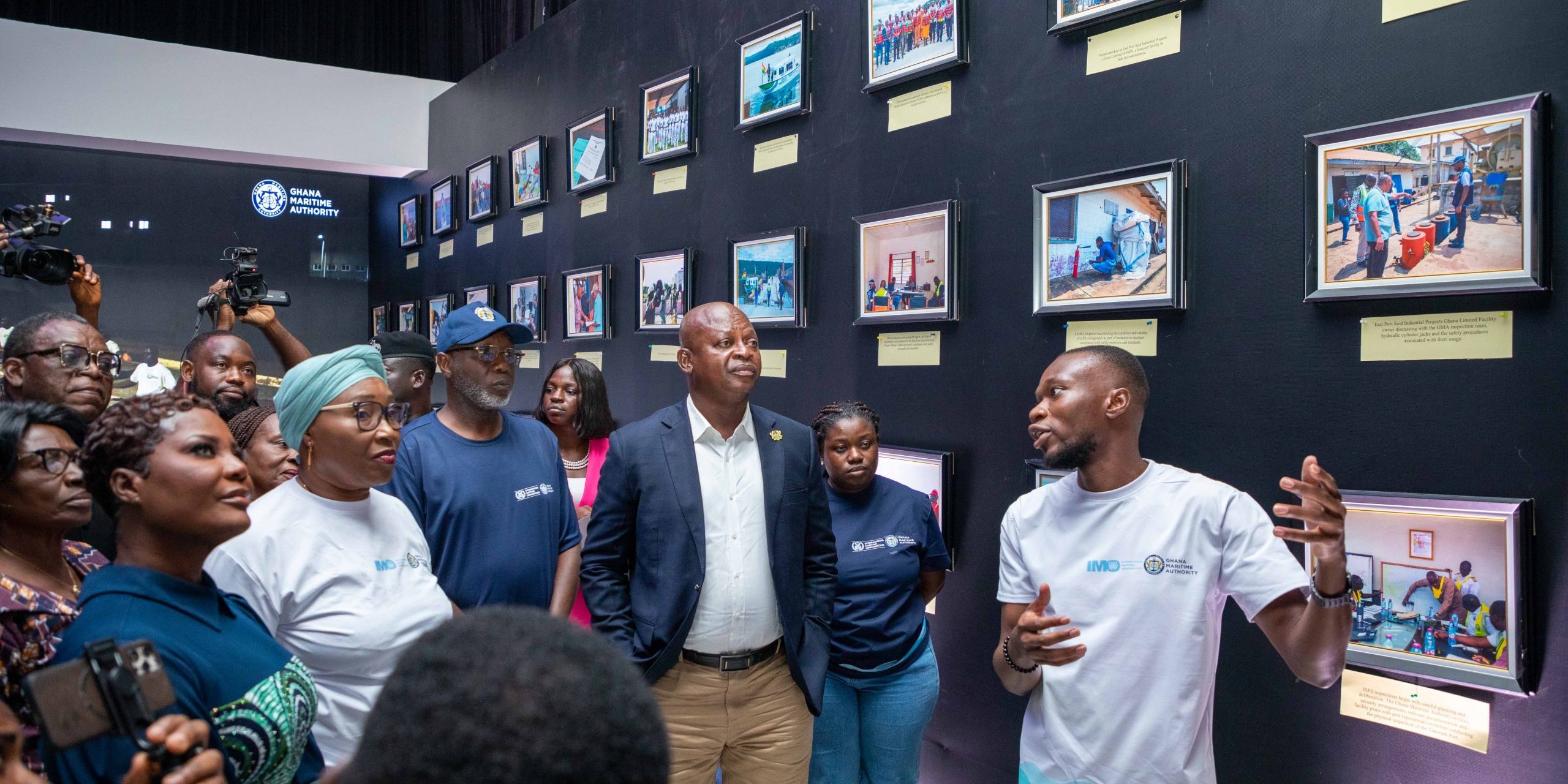
The celebrations brought together key stakeholders in the maritime industry, including representatives from government agencies, development partners, industry players, and academia.
WMD
The World Maritime Day, coordinated annually by the International Maritime Organization (IMO), highlights the shipping industry’s vital role in global trade and the economy while promoting safety, security, and environmental protection.
The 2026 theme, “From Policy to Practice: Powering Maritime Excellence,” focuses on turning international regulations into practical, measurable results.
The Minister noted that the theme is particularly relevant to Ghana, given its strategic location in the Gulf of Guinea and strong ties to global trade. To position the country as West Africa’s premier maritime hub, Mr Nikpe highlighted key government initiatives such as expanding Tema Port, introducing 24-hour port operations, developing Takoradi Port into an oil, gas, and bulk cargo hub, and strengthening local ship-repair and offshore capabilities.
However, infrastructure alone, Mr Nikpe said, would not make Ghana a maritime hub. “It must be supported by effective policy and regulation. Policy must be backed by strong institutions, adequate resources, and skilled personnel, and all these must ultimately deliver measurable results,” the Minister emphasised.
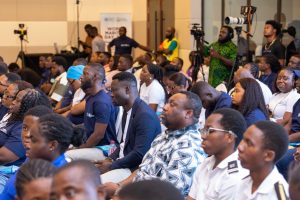
He noted that whereas Ghana has made significant progress in adopting many international maritime conventions and developing policies and legislation, the greater challenge has been ensuring that these commitments are translated into consistent and effective practice across the maritime value chain.
Mr Nikpe welcomed the GMA’s Policy-to-Practice Roadmap under the 2026–2027 World Maritime Day programme, which targets core priority areas including safety enforcement, marine pollution prevention, maritime labour rights, and STCW compliance for seafarer training. Describing the roadmap as a vital opportunity to identify implementation gaps and assign responsibilities, the Minister expressed confidence that it would establish clear timelines and measurable indicators for progress.
IMO
The IMO Regional Coordinator for West and Central Africa-Anglophone, Capt Dallas Laryea, in his remarks the theme for the celebrations is a clear message of the global body’s commitment to ensuring regulations are put into action and providing the necessary technical assistance for implementation to Member States. 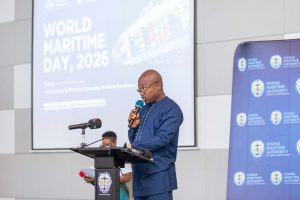
He emphasized that the “Policy to Practice” theme underscores the IMO’s core mission of ensuring that the global regulatory framework it develops is not merely adopted in principle, but translated into concrete national legislation, effective enforcement, and day-to-day operations across the maritime sector.
GPHA
The Director General of the Ghana Ports and Harbours Authority (GPHA), Major General Paul Siedu Tanye-Koluno in a speech read on his behalf by the General Manager in charge of Risk, David Songotu, reaffirmed the importance of translating maritime policies and regulations into practical actions that enhance port efficiency, safety, security, and sustainability.
Highlighting key climate initiatives, Major General Tanye-Koluno pointed to practical steps already taking shape, such as the Just-In-Time Sailing Project, which optimizes vessel scheduling, reduces unnecessary waiting times, and cuts emissions through smarter technology and data usage.
The port authority, he said, remains fully committed to supporting green operations, environmental responsibility, and climate-resilient infrastructure.
“However, modern maritime excellence goes far beyond cranes, berths, and warehouses. It relies heavily on robust digital systems, seamless data sharing, and stringent cybersecurity to make cargo and ship movement more predictable and transparent,” he said.
He stressed that digital and green transformations are meaningless without investing in the maritime sector’s greatest asset: its people.
“Building sustainable human capital requires dedicated capacity building, continuous training, and strong support for maritime professionals across every level of operation,” Major General Tanye-Koluno pointed out.
Shippers Authority
The Deputy Chief Executive Officer of the Ghana Shippers’ Authority, Sylvia Asana Dauda Owu, commended the GMA for its continued leadership in promoting a safe, secure, efficient, and sustainable maritime sector. 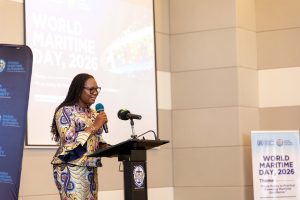
She urged stakeholders to continue working together as one maritime ecosystem, stressing that no single institution can deliver maritime excellence alone.
GMA
The Board Chair of the Ghana Maritime Authority, Madam Jemilat Jawulaa Mahamah, noted in her remarks that the celebration’s theme resonates profoundly with the mandate entrusted to the Authority by the people of Ghana.
She noted that as the IMO embarks on its two-year global campaign, the core message remains that the value of maritime treaties, conventions, and domestic regulations lies not merely in their adoption or ratification, but in their visible implementation and measurable impact on safety of life at sea, ocean sustainability, maritime security, seafarers’ welfare, and port efficiency. 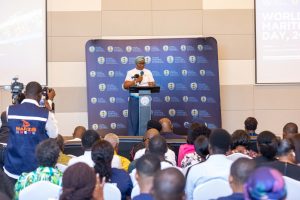
The Director-General of the Ghana Maritime Authority, Dr Kamal-Deen Ali (Naval Capt. rtd), in his welcome address, described the theme as a call to action for all stakeholders, including governments, regulators, port authorities, shipping companies, training institutions, and seafarers.
Dr Ali further stated that Ghana’s maritime sector stands at a pivotal moment, highlighting significant progress in aligning national legislation with key international treaties. These include the International Convention for the Safety of Life at Sea (SOLAS), the International Convention for the Prevention of Pollution from Ships (MARPOL), the International Convention on Standards of Training, Certification and Watchkeeping for Seafarers (STCW), the Nairobi International Convention on the Removal of Wrecks, and the Maritime Labour Convention. 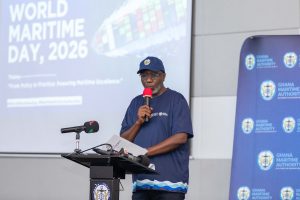
Dr Ali expressed optimism that these regulatory reforms would anchor Ghana’s transition from policy to practice, enforcing compliance to safeguard waters, protect seafarers, and drive maritime growth.