IMO and GMA Train Seafarer Certification Examiners to Strengthen Assessment Frameworks
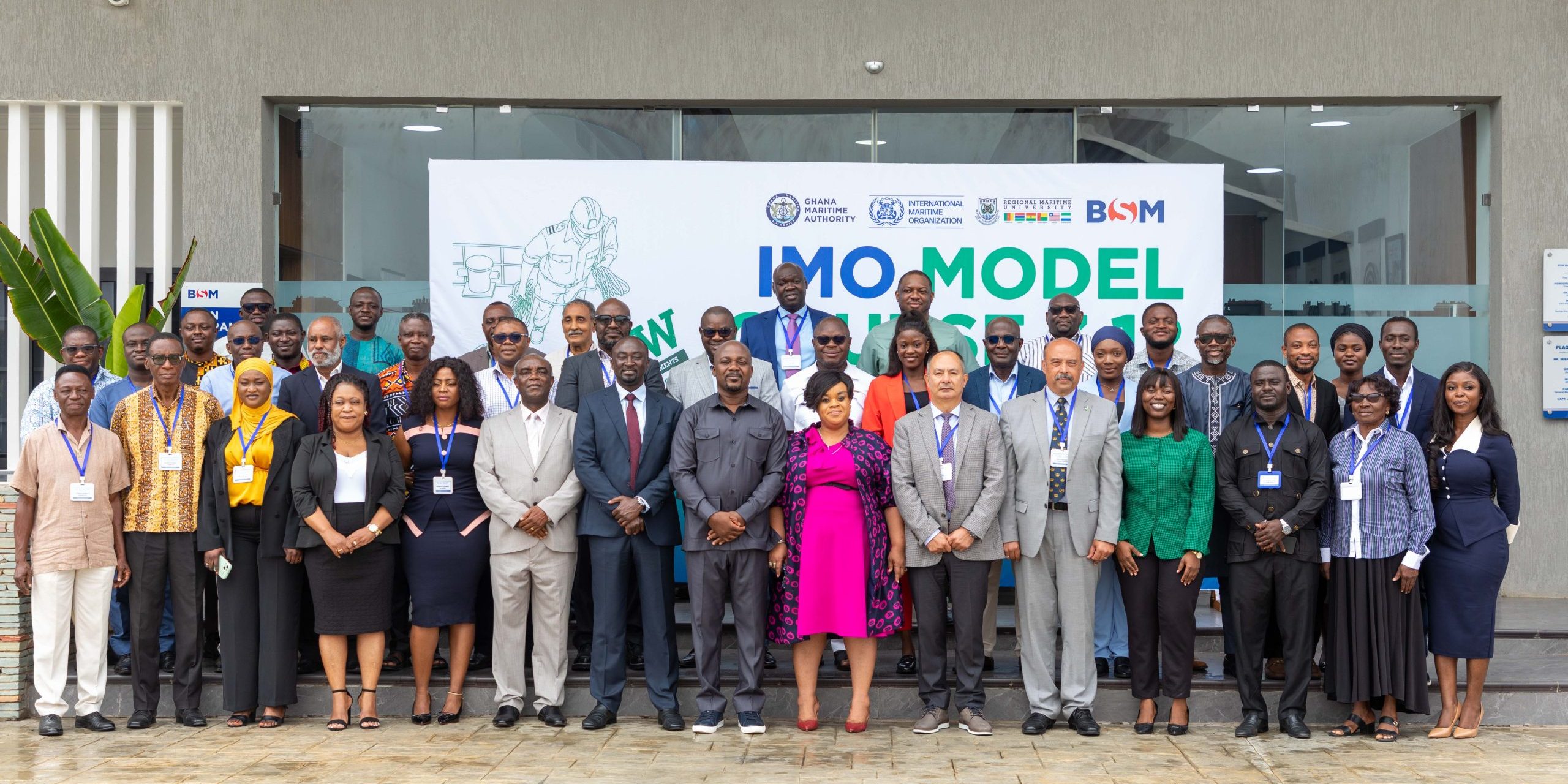
Organized by the International Maritime Organization (IMO) in partnership with the Ghana Maritime Authority (GMA), the five-day program aims to equip sub-regional evaluators with the tools needed to rigorously test and certify the next generation of seafarers.
Dubbed the IMO Model Course 3.12, Assessment, Examination, and Certification of Seafarers, the training aims to address a critical competency gap where only four (4) of the GMA’s 69 seafarer assessors currently hold this mandatory prerequisite qualification.
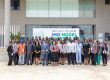
The program brought together 24 participants from Ghana, Liberia, Cabo Verde, Nigeria, The Gambia, and Sierra Leone, along with facilitators from the IMO headquarters in London. 
Closing this competency gap, the organisers believe, will ensure strict compliance with the International Convention on Standards of Training, Certification and Watchkeeping for Seafarers (STCW).
Officials also maintained that the training will guarantee that Ghana’s certification processes, particularly the issuance of Certificates of Competency (CoC) and Certificates of Proficiency (CoP), can withstand global scrutiny as the country approaches its mandatory IMO Member State Audit in 2027.
GMA
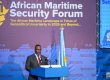
Speaking at the opening, the Deputy Director General of the GMA, Mubarick Masawudu, underscored the heavy responsibility resting on assessors, emphasizing that certification extends far beyond basic paperwork.
 “A Certificate of Competency represents a pledge that must hold water internationally, which is why consistency and integrity in our assessment systems are non-negotiable,” Mr Masawudu said.
He indicated that if one administration’s credentials lose credibility, the resulting distrust casts a shadow over the entire region’s standing in the global shipping industry.
Mr Masawudu emphasized that whereas the training carries added strategic urgency as Ghana prepares for the 2027 IMO Member State Audit Scheme (IMSAS), rather than waiting for external auditors to highlight operational gaps, the GMA is proactively strengthening assessor qualifications and examination frameworks well ahead of time.
Increasing Spotlight
The Deputy Director General also highlighted that as the global maritime spotlight increasingly turns toward Africa, the economic potential of ocean transport demands rigorous preparation and unwavering reliability.
“With the industry evolving rapidly each day, ensuring that every operational rope is tightly secured has never been more critical”, he said.
This growth, he stated relies heavily on raising the bar for the workforce, making comprehensive training an absolute necessity rather than an option.
“To bridge the gap between high expectations and practical reality, well-informed assessors are needed to guide the way”, Mr Masawudu stressed. 
He encouraged participants to use the session for honest self-reflection, scrutinizing current practices, resolving inconsistencies, and ensuring standards adapt to evolving industry demands.
Mr Masawudu also expressed the hope that the training in bridging global standards with local expertise, would go to ensure that the evaluators ensure that African seafarers are thoroughly equipped to meet and exceed—international maritime expectations.
Aligning with Global Standards
The Technical Officer in charge of Maritime Training and Human Element Division at the IMO, and Lead Facilitator, Milton Baron reinforced the critical link between high quality maritime training and operational safety at sea.
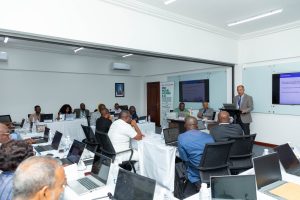 He explained that IMO Model Course 3.12 equips participants with practical tools to effectively implement STCW provisions, select fair and accurate assessment methodologies, organize standardized examinations, and manage the complete certification lifecycle with precision.
With the rise of the blue economy and a strong push toward decarbonization, the industry Mr Baron said faces a unique set of challenges.
“These shifts require immense care in how the workforce drives operations, making robust training essential for sharing the latest examination methods and certification processes”, he stated
To stay ahead of these changes, the IMO, he said is placing emphasis on proactive adaptation and improved standards.
“Expectations are high that safety and productivity will reach new heights, backed by the latest technological competencies. This is particularly crucial as a comprehensive review of the STCW Convention moves forward”, Mr Baron added.
He remain hopeful that the training will help improve standards in terms of safety and productivity, ensuring workers are qualified with the latest technology as member states continuously work to close the gaps in the STCW Convention ahead of the new amendments coming into force in 2030.
The Acting Vice Chancellor of the Regional Maritime University, Jethro W. Brooks Jr in his remarks stressed that as maritime policies and regulations constantly shifting, ongoing professional development is no longer optional, but essential for keeping practices in step with international standards. 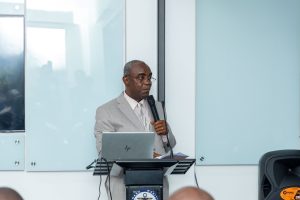
IMO
The IMO Regional Representative for West and Central Africa, Capt. Dallas Laryea, in his welcome remarks emphasized that seafarer competence remains the absolute cornerstone of maritime safety, security, and environmental protection.
Highlighting the pivotal role of the STCW Convention, Capt Laryea noted that as shipping navigates a period of profound transformation driven by automation, digitalization, and alternative marine fuels, strengthening the credibility of certification systems is more vital than ever.
“This evolution requires future-ready seafarers equipped with a broad range of competencies, spanning from traditional seamanship to cyber awareness and the safe handling of new energy sources,” he said. 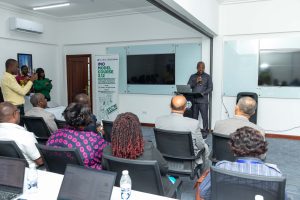
He also pointed to recent milestones, including the IMO’s adoption of the Maritime Autonomous Surface Ships (MASS) Code, as a clear indicator of how rapidly the industry is modernizing.
Capt Laryea is optimistic that the sessions would strengthen regional maritime administration capacity to ensure seafarers are fully prepared for both today’s fleets and the advanced technologies of tomorrow.