Ghana Tops West and Central Africa in Maritime Safety Oversight
Ghana has been recognised as the top-performing nation for maritime safety enforcement in West and Central Africa, after uncovering more vessel safety violations than any other country in the region.
According to official regional data from the Abuja Memorandum of Understanding (MoU), Ghanaian inspectors flagged compliance failures in nearly 45 percent of all ships inspected in 2025.
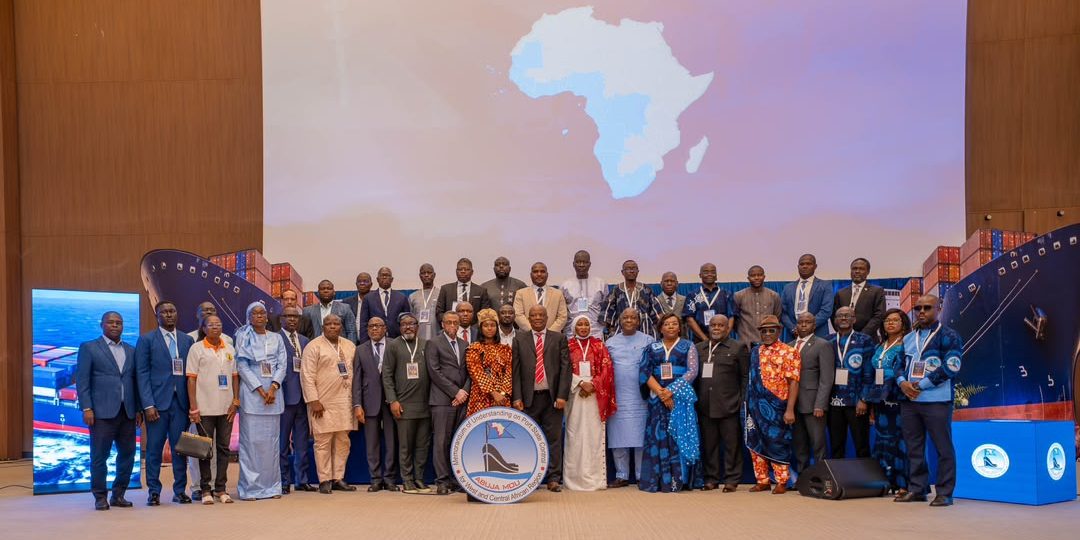
This high detection rate earned the country top honors for its rigorous oversight in targeting substandard shipping at the recently held 16th Port State Control Committee meeting in Gabon.
The Committee’s report reveals that out of 288 vessel inspections carried out in Ghanaian ports in 2025, inspectors detected issues on 129 ships, accumulating a total of 645 individual deficiencies.
This performance contributed significantly to the 1,571 total maritime deficiencies recorded across the entire Abuja MoU region that year.

Abuja MoU Awards
The Abuja MoU awards were established during the 15th Committee Meeting to motivate member nations to eliminate substandard vessels operating in regional waters.
The scheme evaluates performance across three distinct categories, honoring member states that advance gender balance, achieve the highest percentage of inspection commitment over three years, or record the highest percentage of inspections revealing vessel deficiencies over three years.
The deficiency category specifically tracks the proportion of non-compliant vessels detected against total inspections, encouraging thorough oversight rather than routine clearances.
Consistent Track Record
Ghana’s focus on rigorous vessel inspections has remained consistent over the past three years, according to annual performance records compiled by the Abuja MoU.
In 2023, Ghanaian inspectors conducted 168 inspections, identifying deficiencies in 98 vessels, a 58.3 percent detection rate that accounted for 579 of the 1,384 total deficiencies recorded across the sub-region.
In 2024, total inspections rose to 233, with inspectors detecting 513 deficiencies across 100 vessels, while 2025 saw Ghana expanded its operational reach further, completing 288 inspections and maintaining a strong detection rate of nearly 45 percent.

Operational Gaps
While the Abuja MoU records highlight Ghana’s high detection standards, the data also points to significant room for expanding overall inspection coverage.
In 2025, Ghana’s commercial seaports recorded 2,108 ship calls, with Tema handling 80 percent of traffic (1,691 calls) and Takoradi receiving the remaining 20 percent (417 calls).
Out of 1,112 vessels flagged as eligible for inspection, 289 were boarded, leaving 823 eligible vessels uninspected due to operational constraints.
Data from the Ghana Maritime Authority (GMA) further reveals sharp operational contrasts between the two main gateways, with Tema Port completing 110 inspections and detected deficiencies in 80 vessels.
Takoradi Port, by contrast, logged a higher volume of 179 inspections but identified 49 deficient vessels and 176 total deficiencies.
Industry experts attribute this variance to differing operational focuses, inspector availability, and localized shifts in inspection regimes between the two ports.
Systemic Challenges
A recent analysis by the GMA points to broader operational hurdles facing maritime inspection in Ghana and across the sub-region.
Notably, the report highlighted a complete absence of female Port State Control Officers (PSCOs) in Ghana, underscoring an urgent need for gender inclusion in maritime oversight.
The GMA report also identified regional challenges, including severe shortages of qualified personnel, a lack of structured training programs, and persistent vulnerability to bribery and corruption. Furthermore, key operational gaps remain in offshore inspection coverage and advance vessel tracking.
To bridge these deficits, the report recommends the swift adoption of digital integration tools, such as the Maritime Single Window, to streamline pre-arrival risk assessments and enhance vessel monitoring before ships berth.

The Way Forward
Commenting on the recognition, The Deputy Director General of the Ghana Maritime Authority, Mubarick Masawudu noted that Ghana is increasingly viewed as a benchmark for Port State Control quality in a region often challenged by compromised or “clean sheet” inspections.
“This achievement underscores that Ghana’s inspection regime is conducted with professionalism, integrity, and transparency qualities that remain exceptionally rare within the sub-region,” Mr Masawudu said.
Addressing the uninspected vessels and port disparities, Mr Masawudu pointed out that a shortage of qualified personnel previously limited coverage and accounted for Takoradi’s lower detection ratios relative to its inspection volume.
To resolve these challenges, the GMA, he said recently recruited qualified staff to reinforce PSC teams in both Tema and Takoradi and launched targeted training initiatives for officers.
On gender inclusion, the DDG also highlighted that the Authority recently recruited a qualified female officer to be trained as a PSC Inspector, with plans to progressively recruit more women to achieve gender parity across its inspection teams.
He commended the GMA’s Port State Control Officers, who he noted “refuse to issue a clean sheet where a ship does not deserve one.”
“Our next goal is to extend that same standard to every eligible vessel that calls at our ports,” Mr Masawudu added.