Ghana Launches Aggressive Push for Global Cadet Placements at UK Maritime Summit
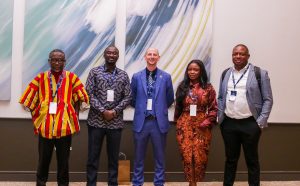
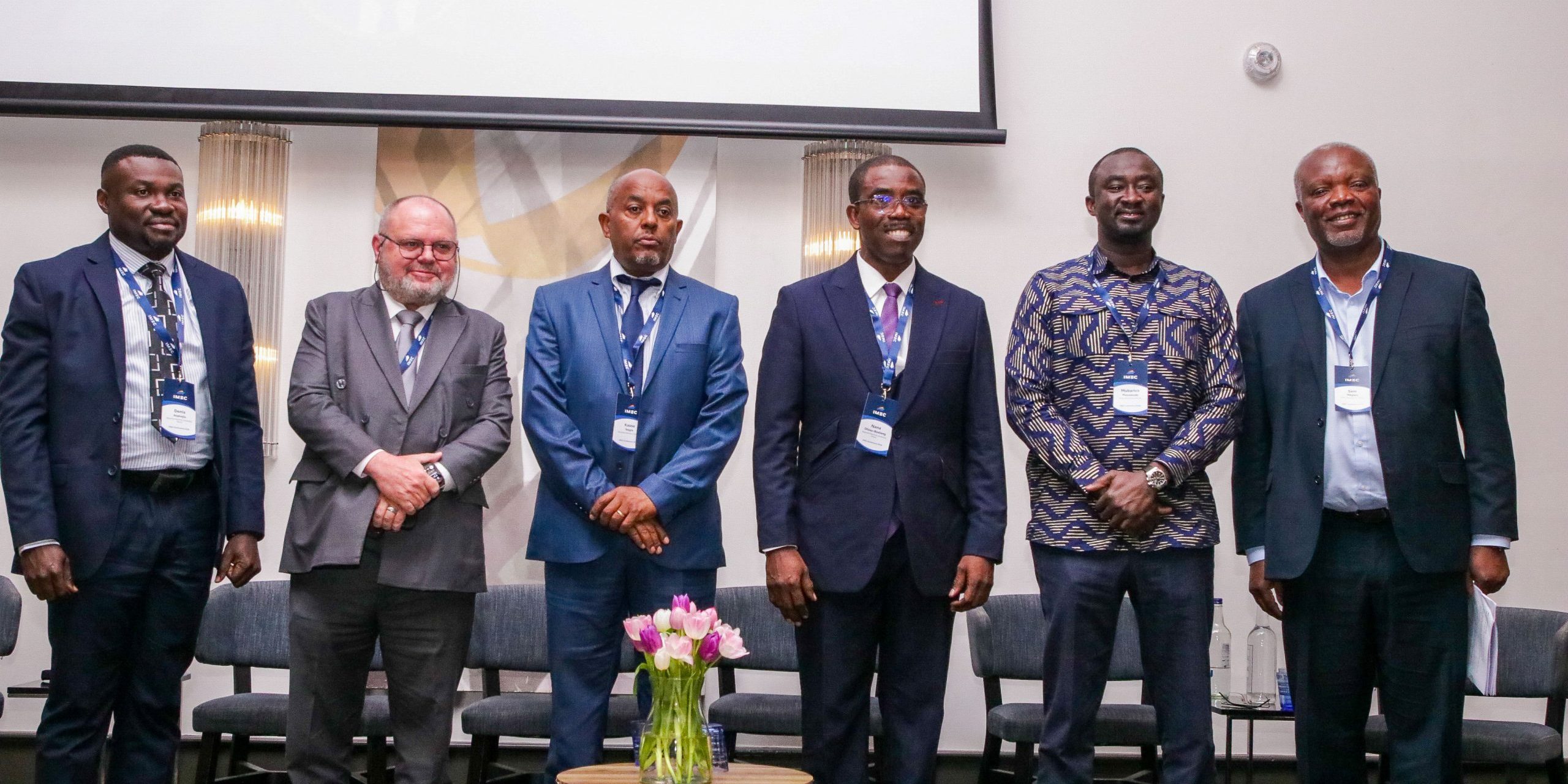
Speaking at a conference organised by the International Maritime Employers’ Council (IMEC) in Southampton, United Kingdom, the Deputy Director General of the Ghana Maritime Authority, Mubarick Masawudu, urged global employers to tap into the Ghanaian market, which offers disciplined, talented, and culturally adaptable professionals uniquely equipped to meet the industry’s needs if given the necessary berthing placements. 
The conference on the theme “Putting People at the Helm” brought together global shipping giants, policymakers, ship management companies, and crew managers to address the rapidly evolving challenges of the maritime industry.
It aimed to address the evolving landscape of the global maritime industry by evaluating the sector’s future outlook and driving progress across key strategic pillars of accelerating the decarbonization transition, developing next-generation leadership and technical skills, and amplifying seafarers’ voices.
It also focused on showcasing Africa’s growing importance as a vital source of international maritime labor while highlighting industry-wide innovations, best practices, and success stories aimed at improving working conditions, enhancing operational efficiency, and supporting sustainable growth.
For Ghana and the broader African continent, the summit marked a critical milestone in positioning its seafarers to fill the widening global maritime labor gap. 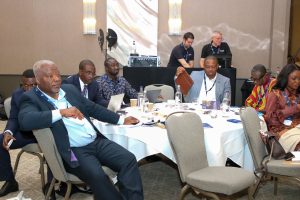
GMA Pitch
Speaking on the panel topic, “Is Africa the Next Frontier for Seafarers? Mr Masawudu pitched Africa’s immense potential as a premier source of qualified, highly disciplined maritime labor.
He pointed out that the exceptional caliber of Ghanaian personnel is already proven by the long-term recruitment choices of elite global lines such as Pacific International Lines (PIL), Bernhard Schulte (BSM) and Hafnia some of which have gone as far as establishing dedicated training centers within Ghana.
He highlighted a defining strength of Ghana’s training model, which he said is a unique paramilitary-style approach that blends rigorous academic preparation with strict discipline to ensure seafarers are physically, mentally, and emotionally resilient enough to adapt to the demands of ship management companies.
“This high-quality training framework is strictly regulated by the GMA under a robust quality management system and international training partnerships, ensuring full alignment with rapidly changing global industry standards,” Mr Masawudu said.
Pointing to the country’s demographic and legacy advantages, the DDG noted that Ghana possesses a large, skilled, and highly trainable youth labour pool.
“With a median ranging from 21 years and a population growing at a pace that produces hundreds of thousands of job-seeking young people annually, Ghana’s demographic dividend is uniquely aligned with the maritime industry’s urgent need for fresh talent”, the DDG said.
This young workforce, he added, is further strengthened by Ghana’s long-standing maritime heritage of a nation whose coastal communities have depended on the sea for trade, fishing, and livelihoods for generations, producing a population with an innate familiarity with and affinity for maritime life.
Combined with relatively high literacy rates, a strong English-language proficiency and a cultural tradition of discipline and hard work, Mr Masawudu pointed out that Ghana’s youth represent a natural, readily developable pipeline for the global shipping industry.
Coordinated National Strategy
Mr Masawudu acknowledged that while Ghana possesses remarkably strong maritime foundations, it has historically lacked a coordinated national strategy to position itself in the highly competitive global maritime labor market.
To bridge this gap, the GMA, he said, recognises the need for a deliberate, government-led framework to seamlessly unify workforce development within the maritime sector.
This shift, he noted, underscores Ghana’s deliberate move to ensure the nation derives full socio-economic benefit from seafaring and the broader maritime labour market, moving beyond simply producing trained seafarers to strategically positioning its workforce for maximum global opportunity.
“As a direct response, the National Seafarer Development and Placement Programme (NSDPP) has been developed as a cross-government initiative, requiring close, high-level collaboration among the ministries responsible for Transport, Education, Youth Development, Foreign Affairs, and Finance,” Mr Masawudu explained.
The core objective of the NSDPP, the DDG said, is to strategically position Ghanaian seafarers as highly sought-after professionals.
“Under the NSDPP, Ghana targets growing its registered seafarer workforce from the current 5,500 to 20,000 by 2036, a scale at which minimum foreign exchange earnings from seafarer remittances are conservatively estimated at $360 million annually”, Mr Masawudu said.
The programme, he said also seeks to diversify beyond traditional deck and engine ratings, deliberately targeting the growing global demand for technical and hospitality crew aboard passenger vessels, including carpenters, electricians, plumbers, cooks, and waiters, among others.
Design on key pillars, the NSPPD, he maintained would establish structured cadet pipelines and systematically dismantle the industry’s toughest hurdles.
“Recognising that a lack of access to sea-time remains one of the greatest global barriers to career progression, a foundational pillar of the NSDPP is intentionally designed to secure guaranteed sea-time placements through locked-in, direct partnerships with shipowners, operators, and crew managers”, Mr Masawudu said.
Beyond technical training, the scope of Ghana’s strategy, he said actively sought to strengthen social protection systems, elevate seafarer welfare, and champion greater gender inclusion within modern maritime careers.
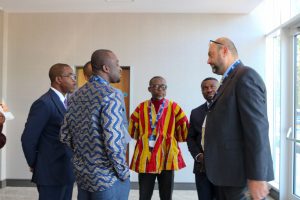
“To ensure the program’s long-term viability, sustainable financing mechanisms are currently being explored, including revolving funds, dedicated scholarship schemes and industry partnerships,” Mr Masawudu told the delegates.
Regulatory Assurance & Digitalisation
The DDG gave strong assurances to global employers, reminding the conference that Ghana strictly implements the international STCW safety convention under its local law (L.I. 2229).
This compliance, he said maintains Ghana’s status on the IMO Whitelist (endorsement recognition) and is backed by successful, rigorous European Maritime Safety Agency (EMSA) audits that guarantee world-class certification.
“In a bid to enhance regulatory efficiency and eliminate fraud, Ghana will soon launch a digital platform that ensures end-to-end digital certification and verification of seafarers, which will further solidify international confidence in Ghanaian certificates”, Mr Masawudu assured the conference.
Comprehensive infrastructure updates, he said were also underway, with Ghana currently overhauling its maritime curricula, upgrading advanced simulation infrastructure, and aligning training systems with the latest STCW amendments, automation, and green shipping technologies.
Recruitment Campaign
The DDG informed delegates that Ghana’s global recruitment campaign is already yielding fruit. 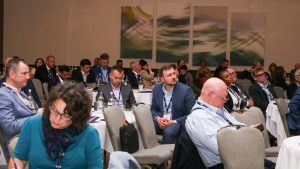
This momentum, he said was built from the GMA’s participation in various international maritime forums in 2025 which has driven active partnerships with major operators like Bahri Ship Management, Hafnia, Pacific International Lines (PIL) and Kuwait Oil Tanker Company (KOTC).
“Complementing these partnerships is the Authority’s ‘Go to Sea’ Campaign, a national initiative designed to attract high-quality young talent into maritime careers.
The campaign seeks to significantly grow the pipeline beyond the more than 300 maritime graduates produced annually by the Regional Maritime University (RMU) and the Kwame Nkrumah University of Science and Technology (KNUST).
Mr Masawudu also announced that Ghana is seeking support from the International Maritime Organization to upgrade local training curricula, ensuring Ghanaian seafarers and instructors develop vital competencies in alternative fuels, biodiversity-sensitive operations, and digital maritime governance.
He called on the global employers and crew managers to look beyond traditional labour markets and give Ghanaian cadets the critical sea-time and berthing placements they need to prove their worth.
He expressed the hope that any operator who engages with Ghana’s maritime workforce would recognise the value of professionals who are technically trained, personally disciplined, and culturally adaptable to any fleet environment in the world.