GMA DELEGATION VISITS WARSASH MARITIME SCHOOL TO EXPLORE ADVANCED SEAFARER TRAINING MODELS

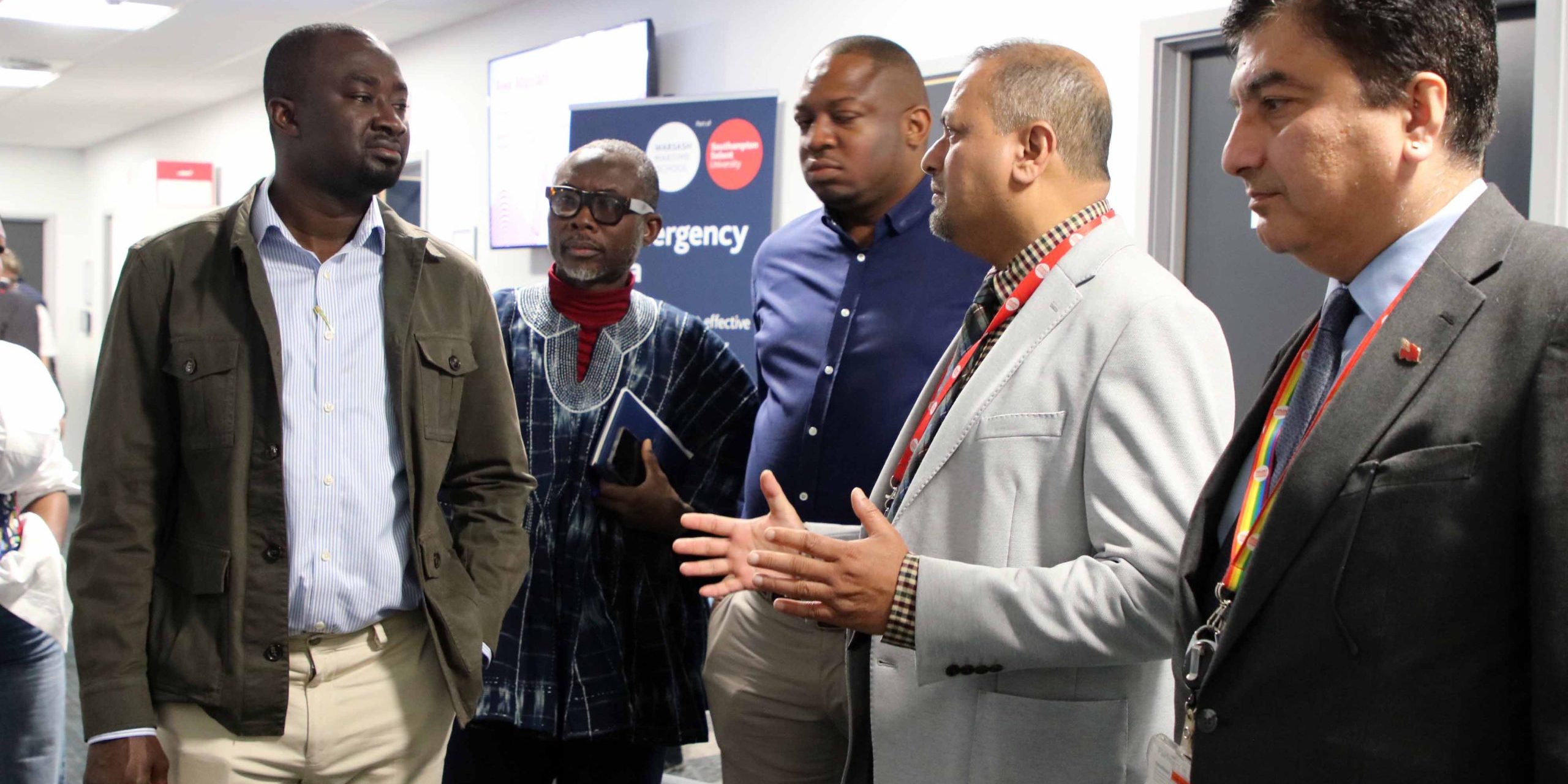
The visit by the five-member team, led by Deputy Director General, Mubarick Masawudu, took place on the sidelines of the delegation’s participation in the recently concluded annual conference of the International Maritime Employers’ Council (IMEC), held in Southampton.
The engagement with Warsash, Mr Masawudu said, allows the GMA to directly bridge high-level global employment dialogues with practical, top-tier training frameworks.
It also forms part of the Authority’s ongoing commitment to enhancing seafarer development and aligning local training frameworks with international standards.
Warsash Maritime School, widely recognised as one of the UK’s premier Maritime Education and Training institutions (METIs), trains thousands of cadets annually and holds a stellar global reputation for its rigorous academic and practical programs.
Modernized Curriculum
During the tour, the GMA delegation observed the academy’s highly advanced training infrastructure, which leverages cutting-edge technology to prepare the next generation of seafarers.
 A key highlight was the academy’s full-mission simulation facility regarded as one of the most sophisticated in the United Kingdom, where cadets undergo intensive, immersive simulation exercises that replicate real-world scenarios at sea.
The academy’s curriculum, according to the Director of the School, Kunal Anand, has been thoroughly modernised to bridge the gap between the classroom and the deck.
Mr Anand pointed out that instructors emphasize that the syllabus’s are dynamically updated to ensure students are taught exactly what is currently operational onboard modern vessels, ensuring a seamless transition and high readiness upon deployment.
Flexible Academic Pathways
The school, officials noted that utilises a structured, five-phase cadetship program, which offers flexible entry points tailored to an applicant’s academic background. High school graduates, Mr Anand said typically enter a structured diploma pathway, while those with A-levels can enroll directly into a full degree program. Alternative entry routes are also accessible via dedicated foundation degrees. This comprehensive progression culminates in Phase 5, a specialised finishing course that relies heavily on advanced simulation to rigorously test and certify the competency of the cadets before they fully qualify.
Synergizing with the ‘Go to Sea’ Campaign
The Deputy Director General of the GMA, Mr Masawudu in his remarks pointed out that the strategic visit directly complements the GMA’s “Go to Sea” campaign, an ongoing national sensitization initiative designed to steer Ghanaian youth toward global seafaring careers.
He noted that Warsash’s highly adaptable entry pathways, which accommodate everyone from high school leavers to advanced degree holders, serve as valuable blueprints the GMA could use to better structure local career guidance.
“By benchmarking against top-tier institutions like Solent University, the GMA aims to ensure that Ghanaian seafarers remain competitive, highly skilled, and compliant with evolving global shipping demands,” Mr Masawudu said. 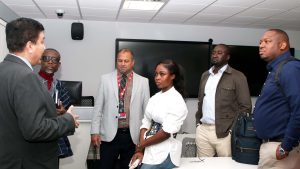
The DDG also highlighted how the insights from the UK visit would reinforce the GMA’s youth outreach efforts, demonstrating that modern maritime careers are highly technical, globally competitive, and open to diverse academic backgrounds, provided training frameworks meet strict international standards. He expressed hope that the GMA’s regulatory and promotional strategies will continue to create vital pathways, particularly as the Authority expands global sea-time opportunities for Ghanaian cadets through bilateral agreements.